[3] Unofficial guide to your ears - Why Diagnostic hearing test when you can do it on your phone?
Test booth vs. phone apps (or other)
Some patients come in with a hearing test from a phone apps or an online website. Let me go over why these phone app or online tests are not valid diagnostic tools.
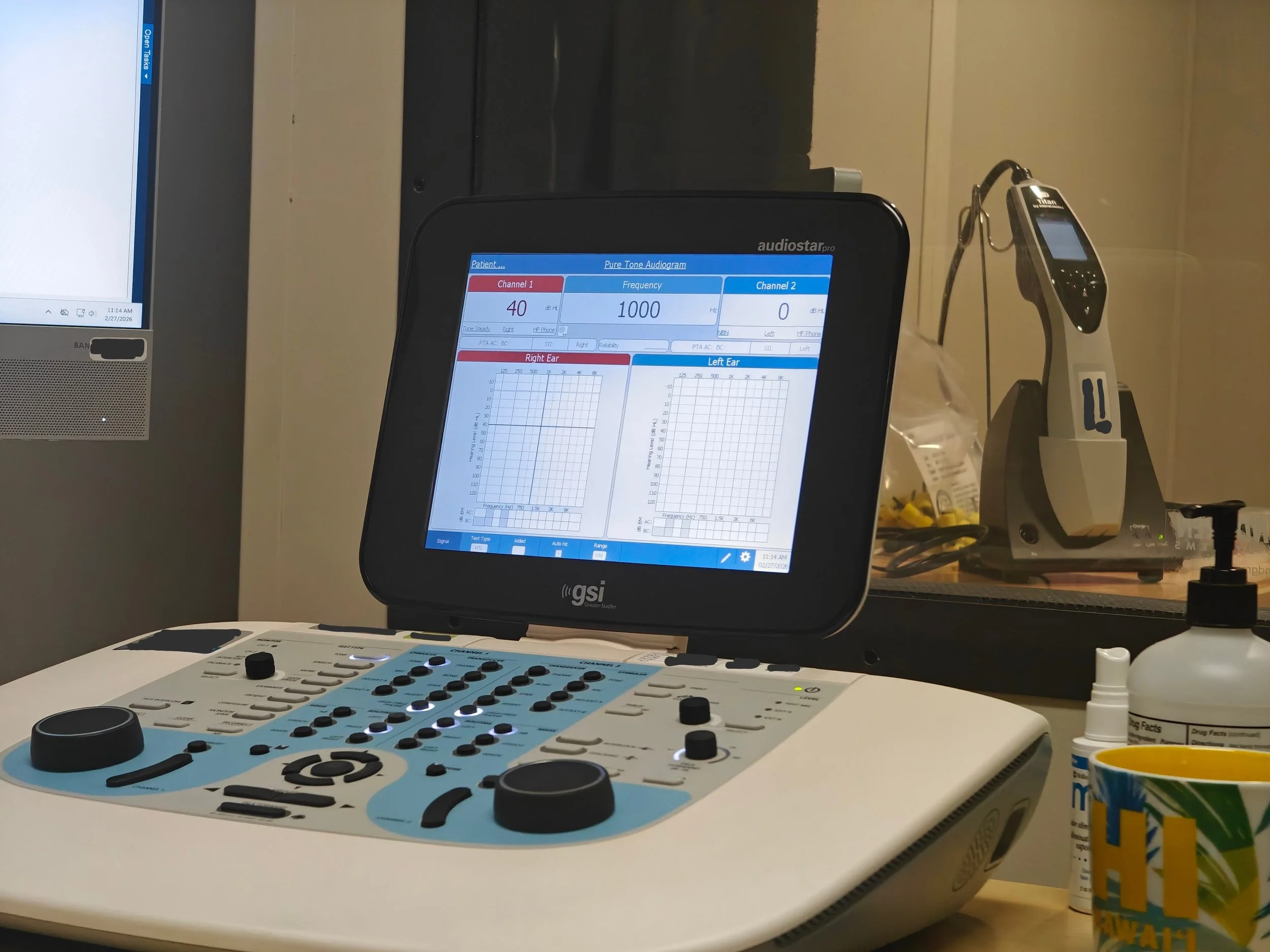
Calibration
Calibration is setting and adjusting equipment so that every device can give the same result. You can think of this as tuning a guitar. If the guitar is not tuned, whatever piece you play will sound horrible. But as long as it’s tuned, you can play a song at right sounding notes on whatever guitar you grab. The same idea applies here. If the testing equipment is not calibrated, a person with normal hearing can test as having mild, moderate, or severe hearing loss. How do we know it is calibrated? There is a physical sticker on every device that states when it was calibrated, who calibrated, when the next calibration is due, and the company who takes care of it, along with the make, model and serial number. Some audiograms actually come with this calibration information (though it’s not common.) After the equipment is properly calibrated, it is supposed to comply with the criteria, ASA/ANSI S3.6-2025, Specification of Audiometers. This is a standard created by the Acoustical Society of America (ASA) and the American National Standards Institute (ANSI). The last “2025” at the end means that it was last updated in 2025. Oh, by the way, there is a strict room noise standard for the testing environment as well. It is ASA/ANSI S12.2 ASA/ANSI S3.6.
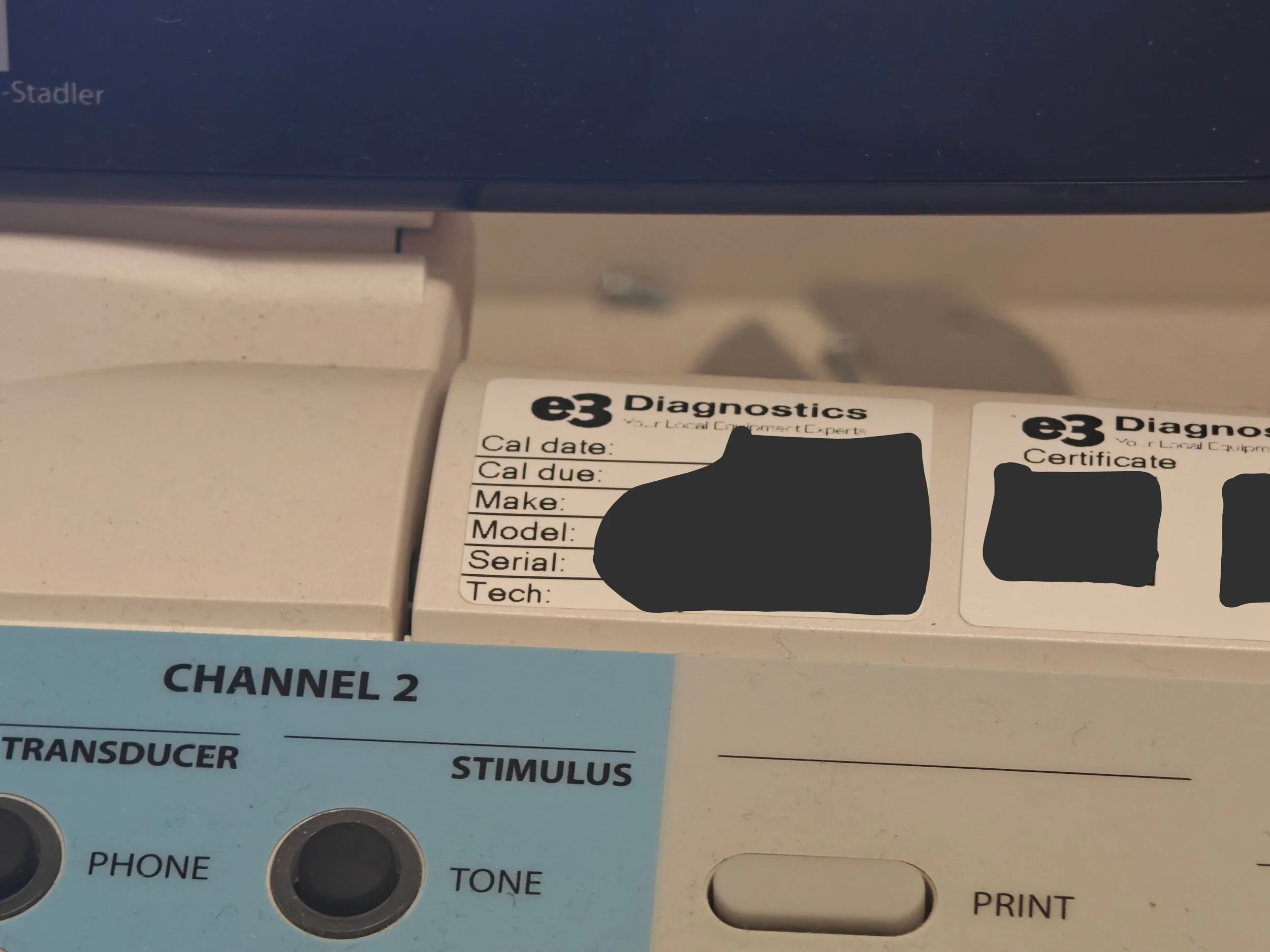
Calibration info on the audiometer.
So if you can make your phone, tablet, laptop or desktop to meet those standards, you have a valid testing equipment and environment. You still lack a tester who can sign the audiogram and take responsibility of the result, but at least environment would be qualified.
Missing Pieces
In order for a hearing test to be truly diagnostic, you need several pieces on top of the headphone test.
First, the status of the ear canal. If the ear canal is blocked by earwax, the validity of the hearing test is immediately compromised. But this could be taken care of with those video otoscopes from Amazon. And they are cheap. If you have a curvy ear canal, you won’t be able to take a full clear look at how your ear canal is. By pulling your ear back, you can straighten the canal, but doing that with an otoscope in one hand while wrapping the other arm around your head to pull your ear back? I would recommend seeing a physician.
Second, tympanometry. Tymp in short. Tymp provides information about how your eardrum moves. If there’s fluid behind your eardrum, it won’t move as much as it would without the fluid, leading to what we call conductive hearing loss. Tymp is measured with a probe in your ear. If your ear canal is blocked, or the tip of the probe is touching the wall of the ear canal, then the tymp would not reflect the mobility of your eardrum. Do these two reasons not convince you? There’s more.
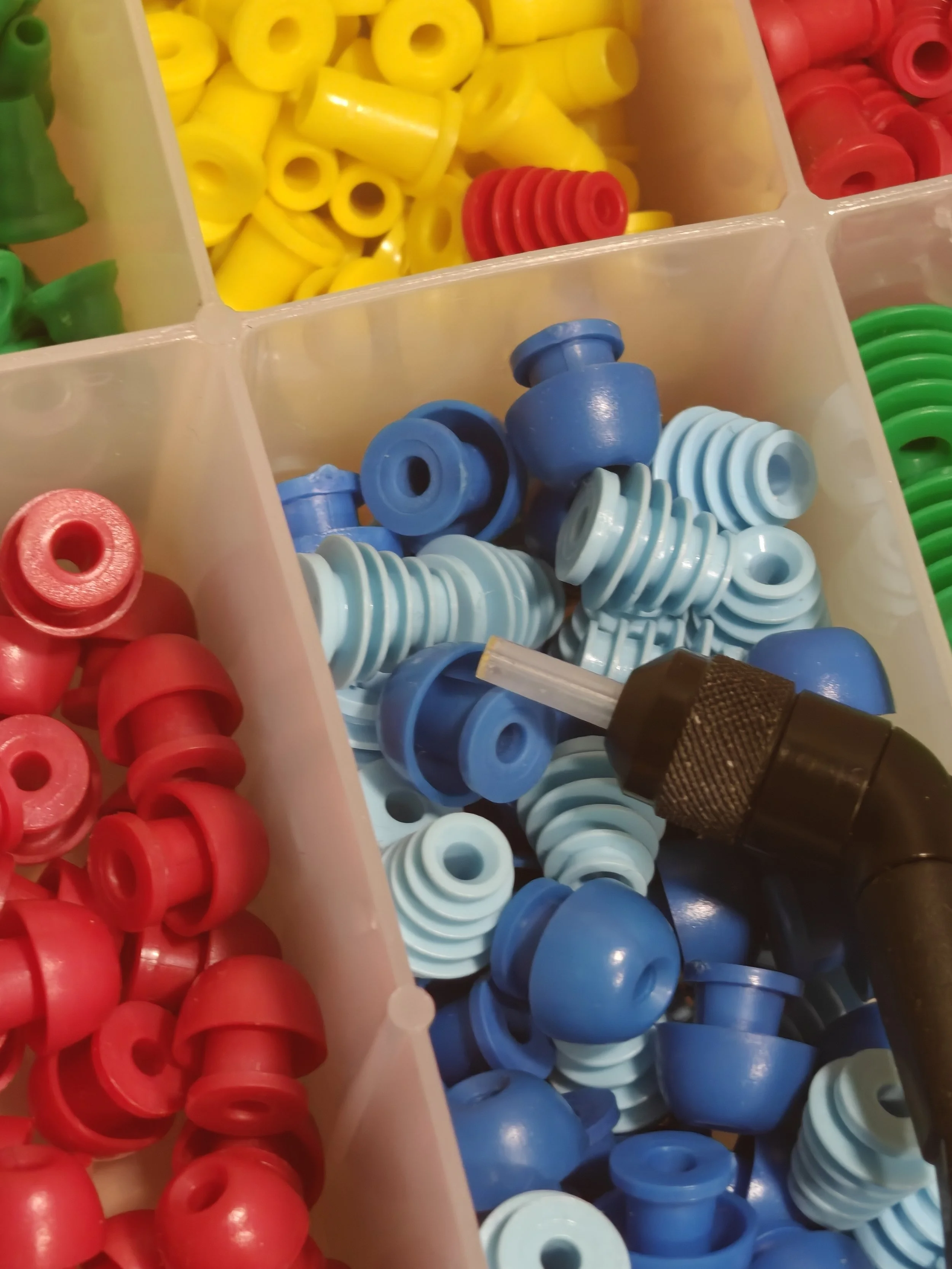
Tymp probe and various tips
Third, speech audiometry. Speech audiometry looks for 1. The lowest level you can understand the meaning of what you heard, and 2. The ability to understand the words when the volume is sufficiently loud. The first is called Speech Recognition (or Reception) Threshold, (SRT), and the second is called Word Recognition Score (WRS). SRT is used to double-check your responses to beeps are valid, and WRS is used to determine if you would benefit from amplification devices. Procedures to test them include playing words at different levels, and having you to repeat the word back. To determine accurate presentation levels and collect valid results, you need a a professional with a background in this test. There have been cases where patients thought they could hear perfectly when things are loud. However, testing revealed their WRS was near 100% in one ear, but very poor (lower than 20%) in the other. This means even if someone is shouting directly at them, they only understand about 20% of the words in that poor ear, even though they can detect that someone is shouting and speaking normally.
Lastly, bone conduction thresholds. Bone conduction testing itself seems straightforward. You just wear a bone conduction device and run a hearing test just like with headphones. The problem occurs when there should be masking. With standard headphones and insert earphones, the likelihood of the needing masking is relatively low. But with bone conduction, it is needed more often. The idea of masking is simple: sometimes sounds in one ear can cross to the other side, so we need to distract the non-testing ear. So we present a noise into the non-testing ear. Concept is easy, application is complicated. There is a method to come up with a level of the masking sound and how to determine thresholds, but it is too deep for this post. And as you can imagine, if it is too deep for this post, it should be done with a clinician who knows how to properly execute the test.
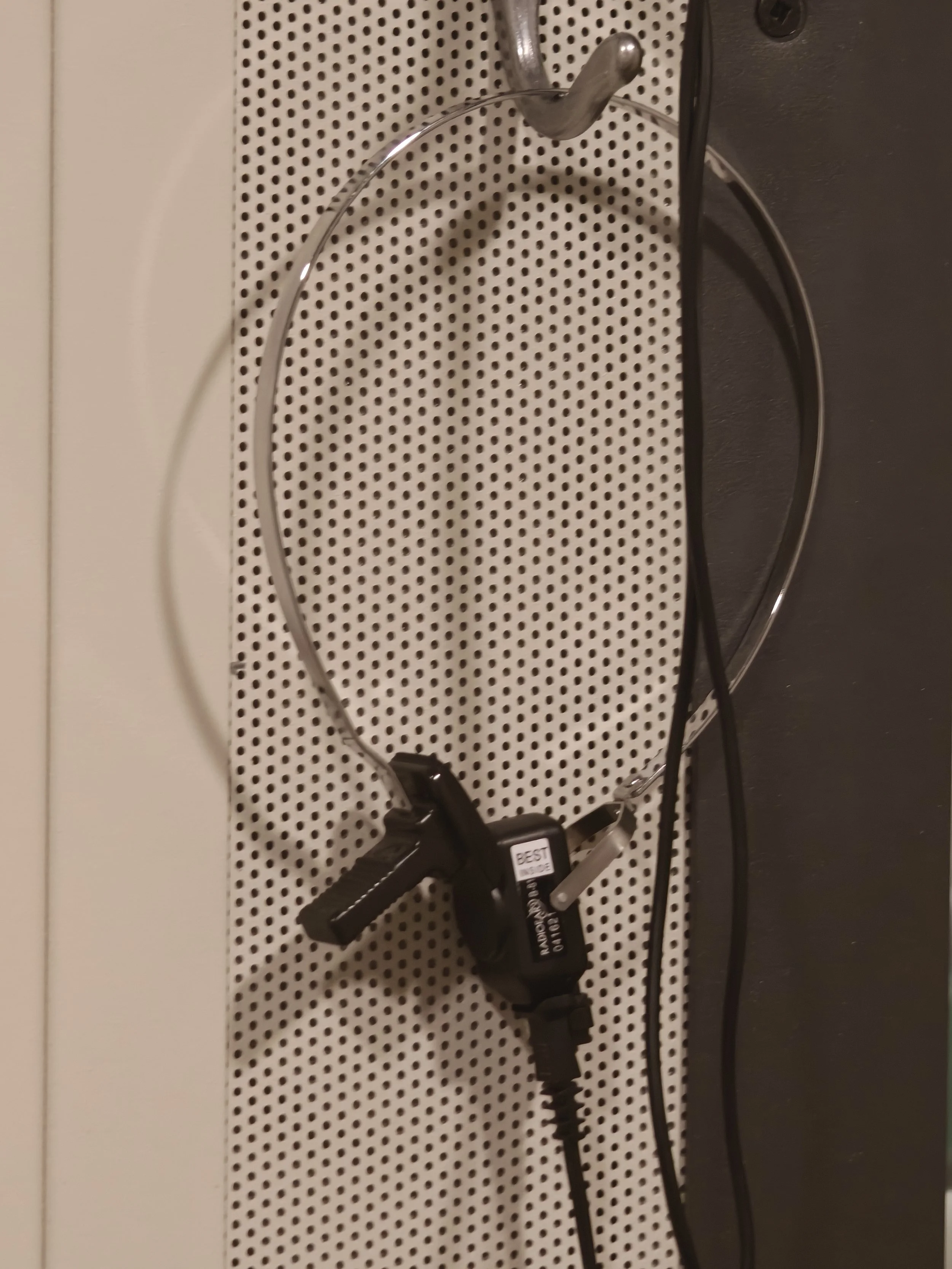
Bone conduction headphone
I hope this is enough to convince you to get a diagnostic hearing test in a clinic if you are wondering about the status of your hearing. You only get one set of ears for your life, so when you get tested, I want you to get as accurate results as possible in the safest way. The hearing tests that apps and websites advertise are really just screening tool, rather than actual diagnostic tests. Don’t be misguided. Hearing screening tools are great for getting a broad idea of where your hearing is at. Most are designed to provide results that shouldn’t be too far off from a real diagnostic test. But some do generate results that are way off (off by more than 15 dB HL, which is enough to change a medical diagnosis.) I want you to be cautious when you use those tools.
As always, updates and comments about the information above are welcome. No hatred and trashy comments. See you in the next post.
