Realforce R2, the Hermes of the keyboard world! Except…
So, my previous posts were mostly about my portable setup, but my desktop? Well… it is a bit messy. I’m not exactly an Instagram "deskterior" person. But I care deeply about my peripherals—especially my main keyboard.
Enter today’s guest: the Topre Realforce R2 TKL.
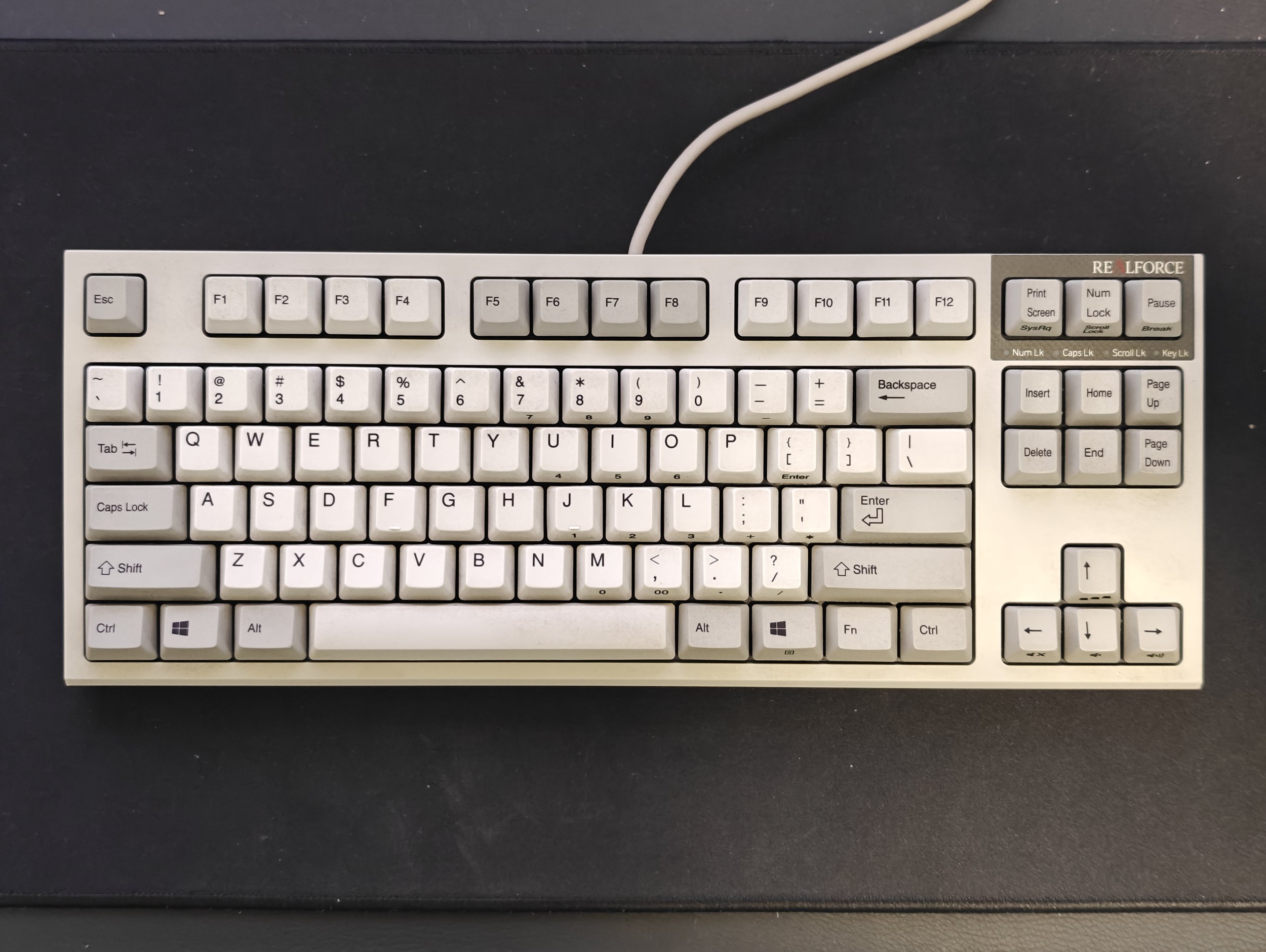
It is an older model, I know. We now have the R4s as the newest generation, which finally support Bluetooth and are much more portable (in fact, I thought the R3 was the latest model until I looked up). But mine is the R2 PFU Limited Edition with Topre switches. This means it was a collaboration with Happy Hacking (HHKB), another king of the capacitive keyboard world.
To put that into perspective, this is basically a collaboration between the Samsung and Apple of the capacitive keyboard world. Exciting, isn’t it?
Capacitive vs. Mechanical: What’s the difference?
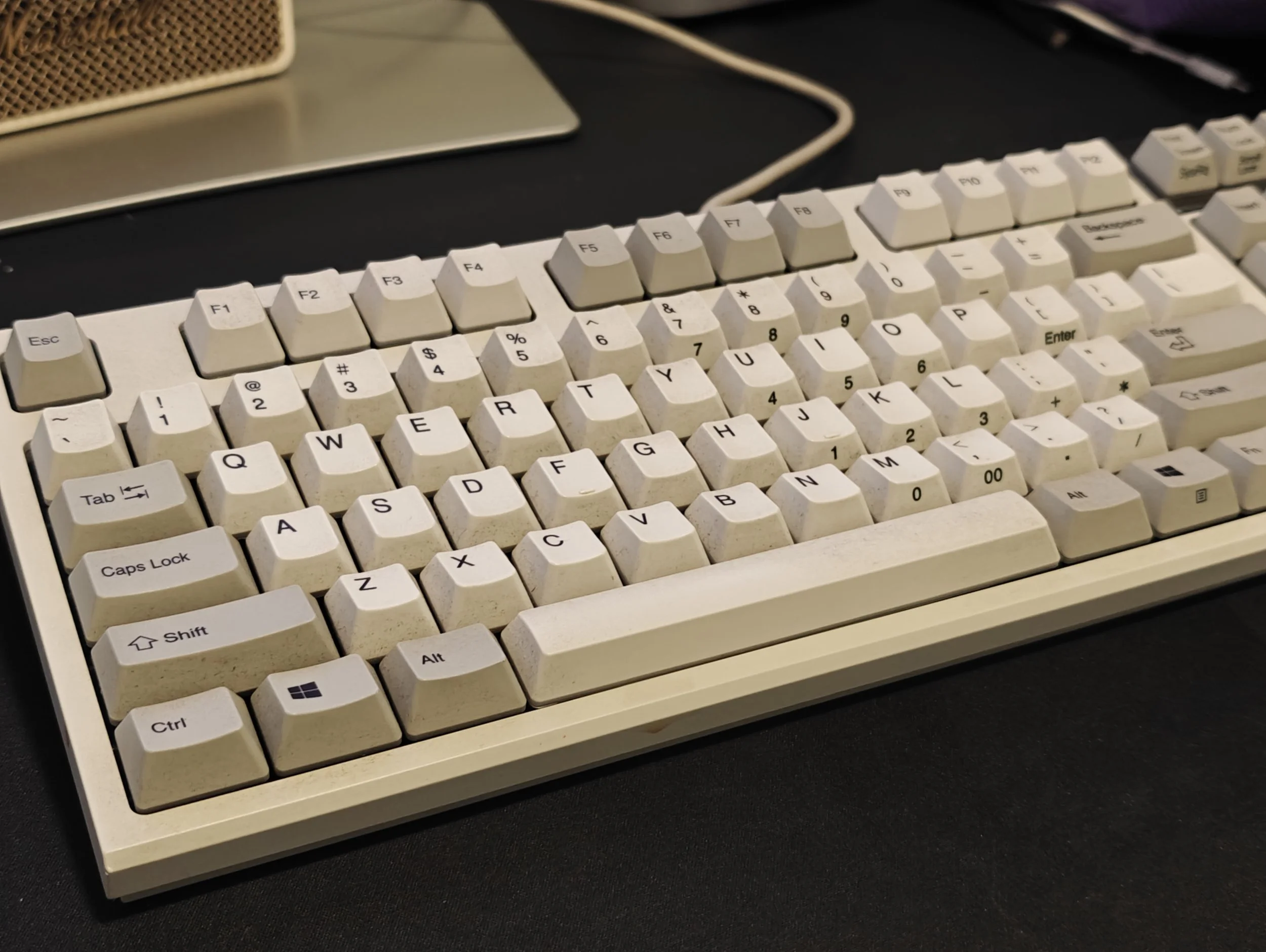
As a keyboard hobbyist in the keyboard world, I won’t bore you with the granular details of every key switch type. The big difference is this: a mechanical keyboard has physical switches that must be actuated, giving you that clicky, spring-like feedback. A capacitive keyboard uses an electrostatic field underneath the keys, resulting in a much smoother, less clicky typing experience.
That is why you see 45g and 30g options for capacitive keyboards. The resistance is controlled by the physical weight rating of the rubber dome, whereas mechanical keyboards regulate pressure with springs.
Since this Realforce is capacitive, the key weight determines how hard you need to press. The spec sheet for the PFU Edition states 45g. The higher the weight, the harder you need to press, so you generally don’t want it too heavy (like 55g or 65g) for daily use. 45g is the sweet spot—comfortable for most people. I type a lot for this blog, and I don’t have any fatigue.
The Experience: Like riding in a car with wonderful suspension.
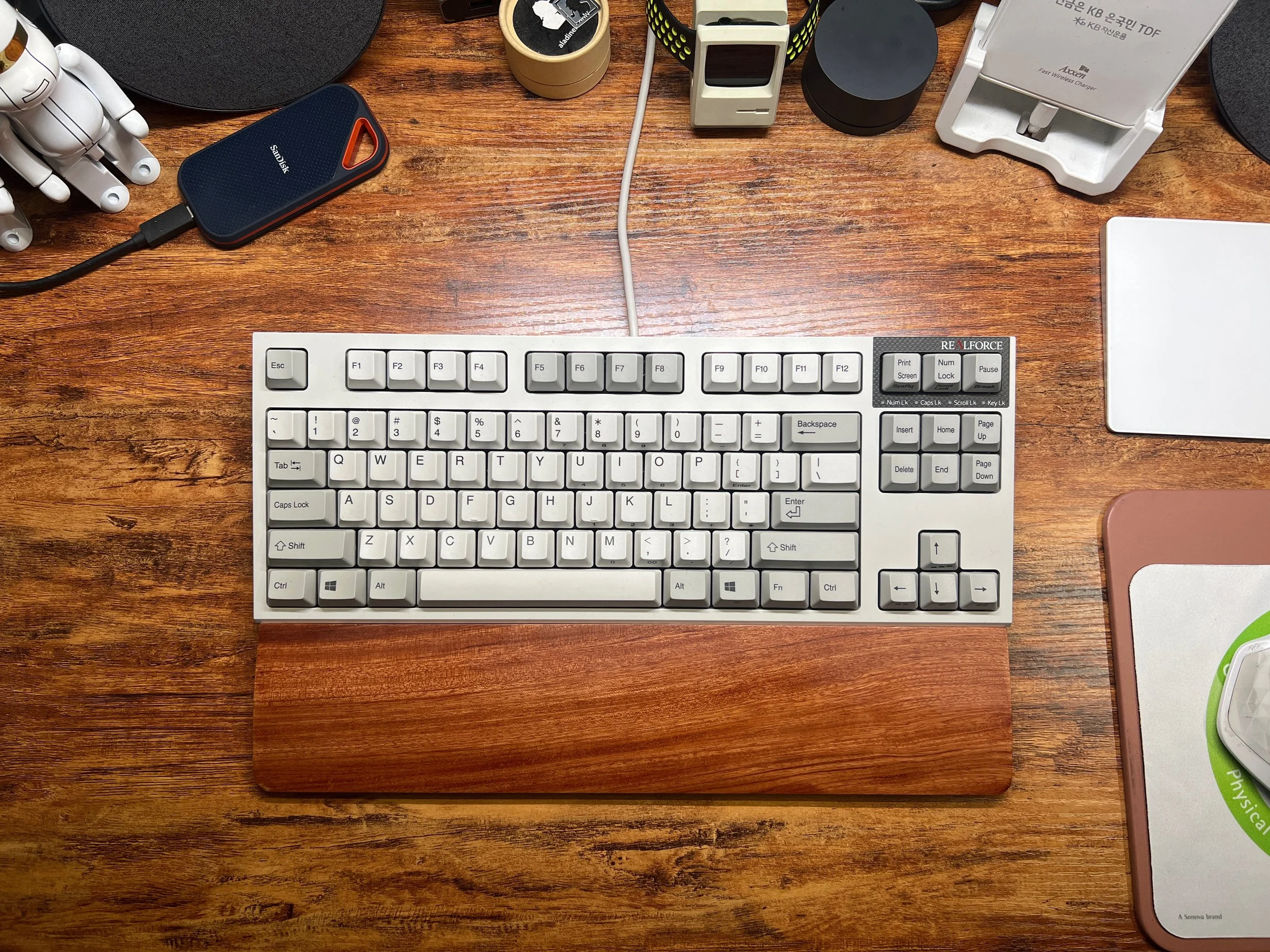
a picture of Day-1 with this keyboard
My first impression was entirely about the typing feel and that signature “thock” sound. I have to agree with the hardcore keyboard community on this one—it is incredibly satisfying and instantly feels like a premium piece of hardware.
If my Nuphy keyboard has the energetic, snappy vibe of a teenager, this one feels like a distinguished nobleman. It is very quiet, yet it maintains a distinct acoustic profile that sets it apart from flat, lifeless scissor-switch keyboards.
To put it another way: if the Nuphy is a Tesla Model 3 or a BMW 3 Series, this Realforce is a Tesla Model S or a Genesis G80. It’s smoother, heavier, and more refined.
The "Hermes" Factor: Quiet Luxury
In the Korean tech community, Realforce is referred to as the "Hermes" of the keyboard world. I agree with the luxury tier, but I think a more accurate fashion comparison is Brunello Cucinelli. It doesn't scream for attention with RGB lights. It shines with quiet luxury and a timeless aesthetic with a fantastic balance of a mix of that classic, old-school keyboard vibe, but with a modern, sharp, angular shape. It’s a renewed retro design that just looks amazing sitting on the desk.
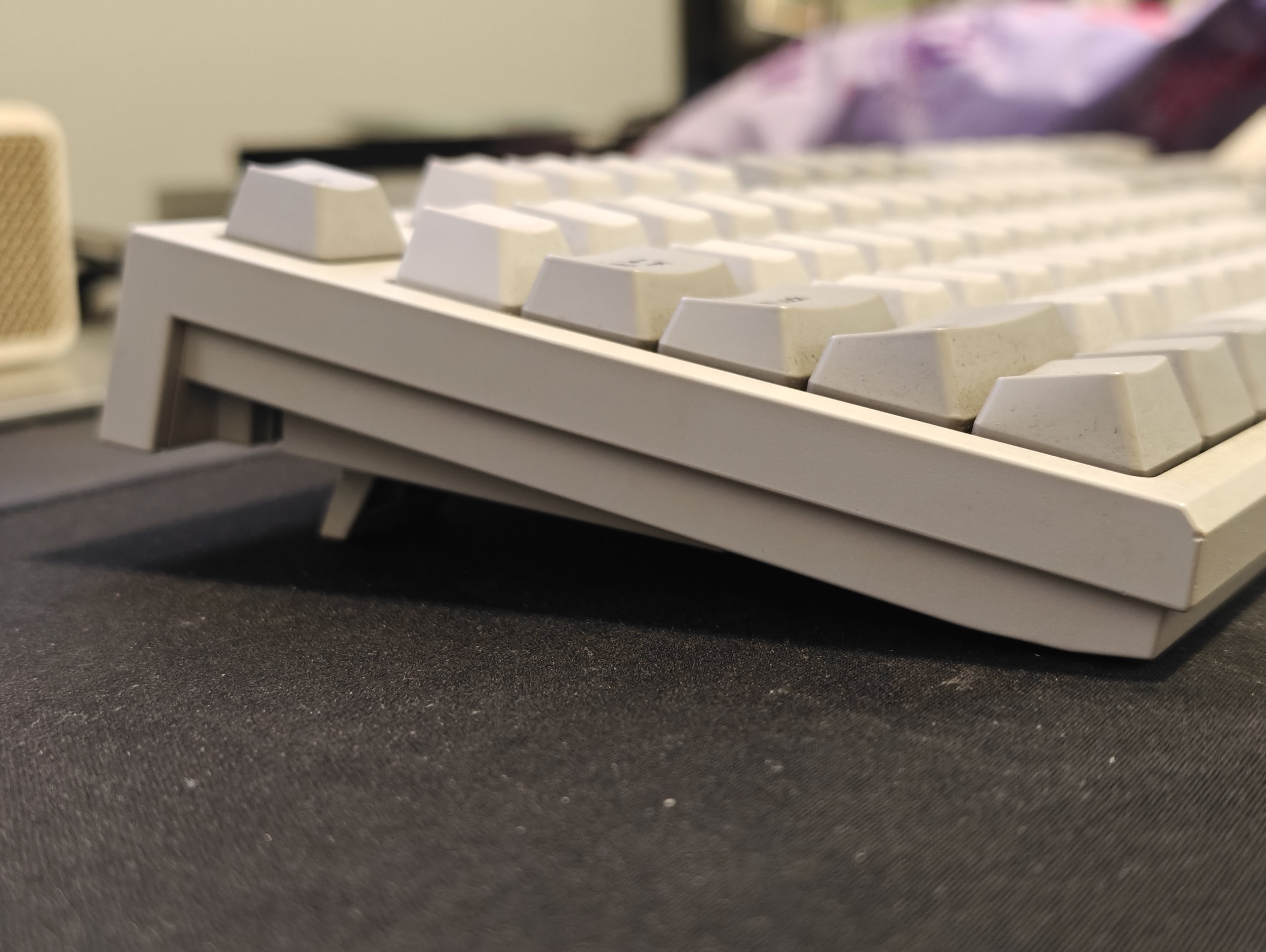
The keycaps are slightly inward-curved, which cradles your fingertips and makes the tactile touch comfortable. The key spacing and sizes are generous, lowering the likelihood of mistyping. This Tenkeyless (TKL) model drops the number pad to keep it compact, freeing up mouse space and adding to a minimalist desktop aesthetic.
The Big "Except...": "The Cable "
So, why the ellipsis in the title? What is the catch?
Honestly, it isn't the price. I think the price tag is entirely justifiable given the sheer build quality. And it isn't the weight, either. I am actually afraid that if they made this chassis lighter, that grounded heaviness—the solid acoustic feedback you get—would be compromised. Sure, I miss the number pad from time to time when I'm crunching numbers, but I’d much rather keep my desk setup minimal.
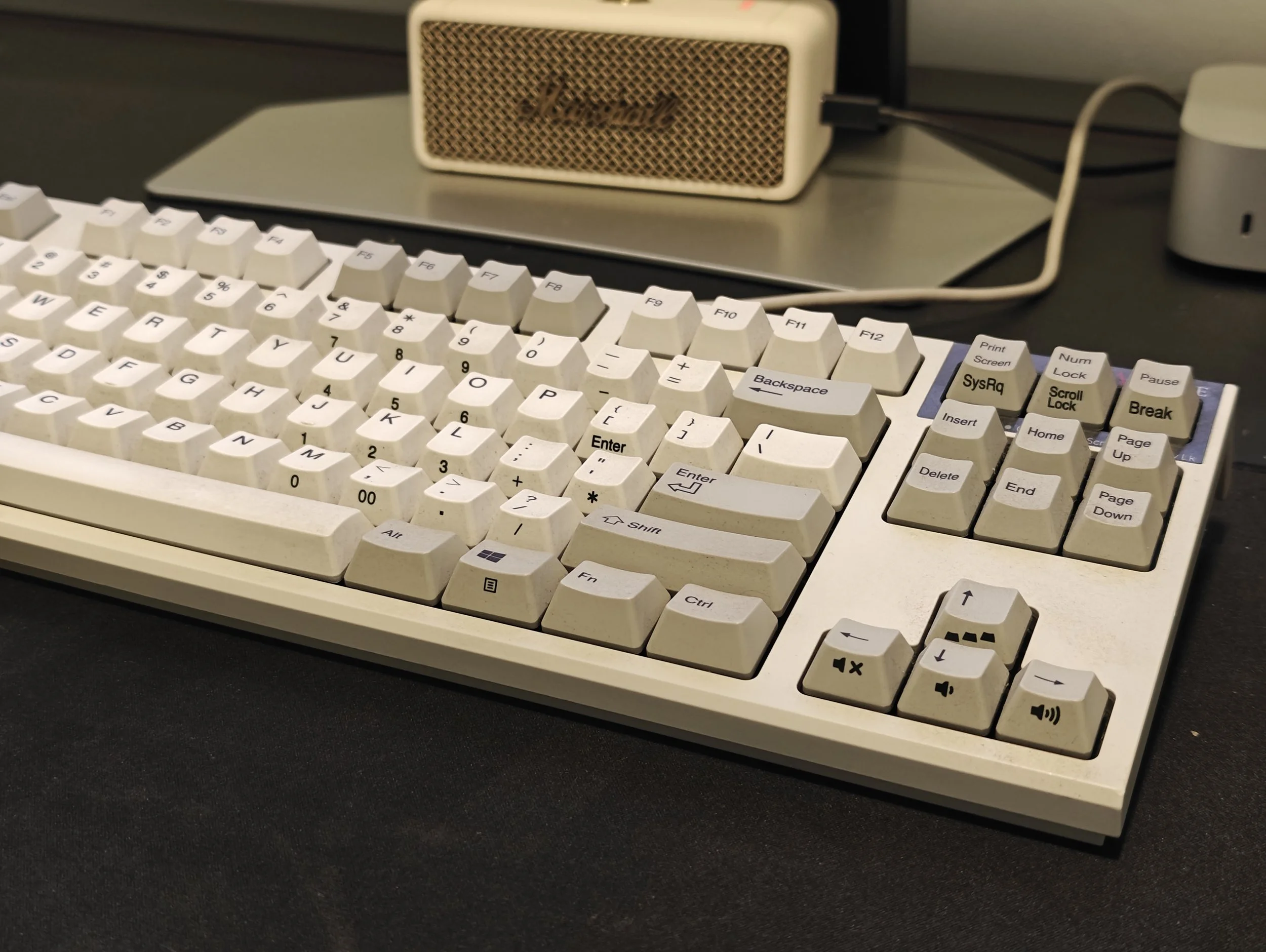
No, the real "Except..." comes down to one design choice: the cable.
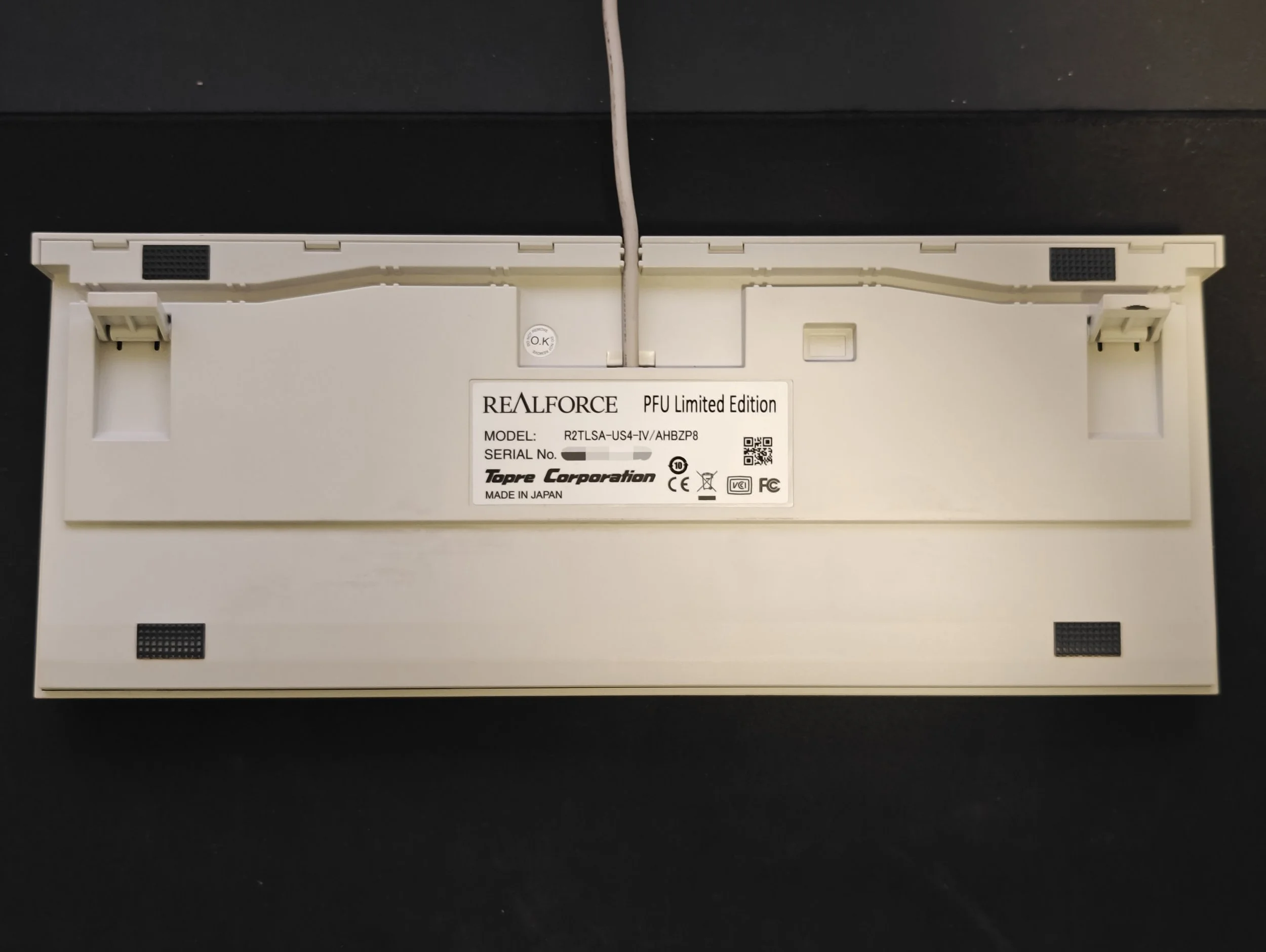
I loved typing on this keyboard so much that I actually tried to carry it around in my bag with my laptop. But the lack of Bluetooth and the non-detachable cable made it quite difficult. It is hard to organize this cable neatly, no matter how hard I try. It doesn't coil well. Also, while the original color matched the keyboard's retro aesthetic out of the box, over time it collected dust—instead of aging into a vintage vibe, the cable just looks dirty and heavily used. On a beautiful device, it is frustrating that I can't swap the cable out for a clean, custom one.
The Final Verdict: Should you buy it in 2026?
Given the build quality of the R2, I believe the newer R4 would be a solid choice. I haven't personally tested the R4 yet, but since the entire tech world is moving toward wireless setups, I would go with the R4 today just to get that Bluetooth functionality.
However, if you are deeply into that retro feeling and can find a used R2 on eBay at a great price, I recommend grabbing it. The typing experience alone is worth it.
On the flip side, if you want loud, clicky sounds and sharp mechanical feedback, Topre switches are not for you. You should pivot and look into true mechanical keyboards like Keychron, Nuphy, or Lofree (the Lofree Flow looks amazing right now).
Let me know what you guys are typing on down in the comments. See you in the next one.
